A biograpy of jadeite in Maya civilization
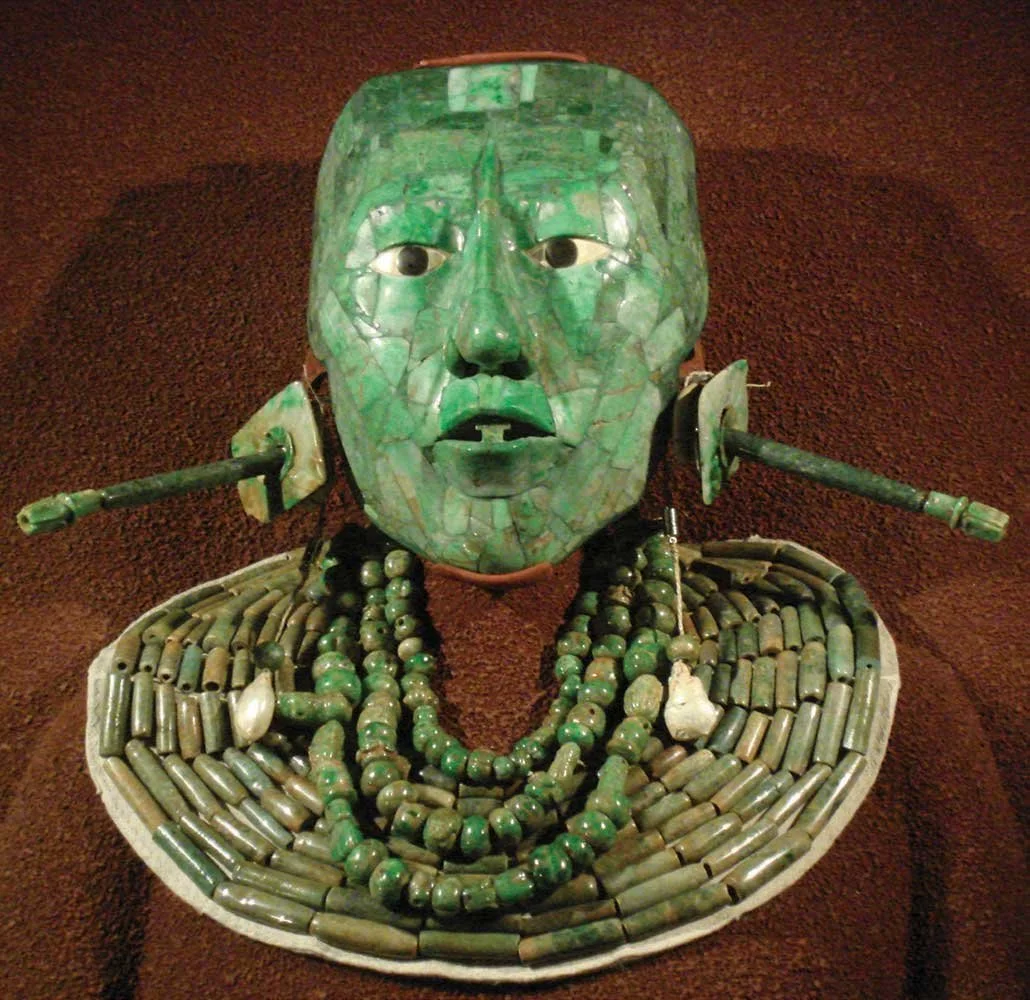
Maya Jadeite Mask of Kinich Hanab Pakal, Ruler of Palenque, 615-683 AD
Deep within the tropical rainforests of Central America, the Maya ascribed meaning to a green gemstone that transcended the material world. Jade, known as "the mineral of the earth gods," witnessed the rise and fall of Maya civilization over 3,000 years.
I. The Source of Jade: A Rediscovered Treasure
The Motagua River valley in Guatemala is the birthplace of Maya jade. The region produces jadeite, which is harder, denser, and more brilliantly colored than the nephrite commonly found in China. From 1000 BC onwards, the Olmec, Maya, and Aztec peoples mined jade here, transporting it throughout Central America via canoe trade networks along rivers and coastlines.
However, the arrival of Spanish colonizers severed this ancient vein. Knowledge of the jade sources was lost for 500 years, until Mary Lou Ridinger rediscovered these jungle-hidden mines in 1974, unveiling the mysteries of Maya jade.
II. Two Faces of Jade: From Altar to Marketplace
The Exclusive Treasure of Royalty
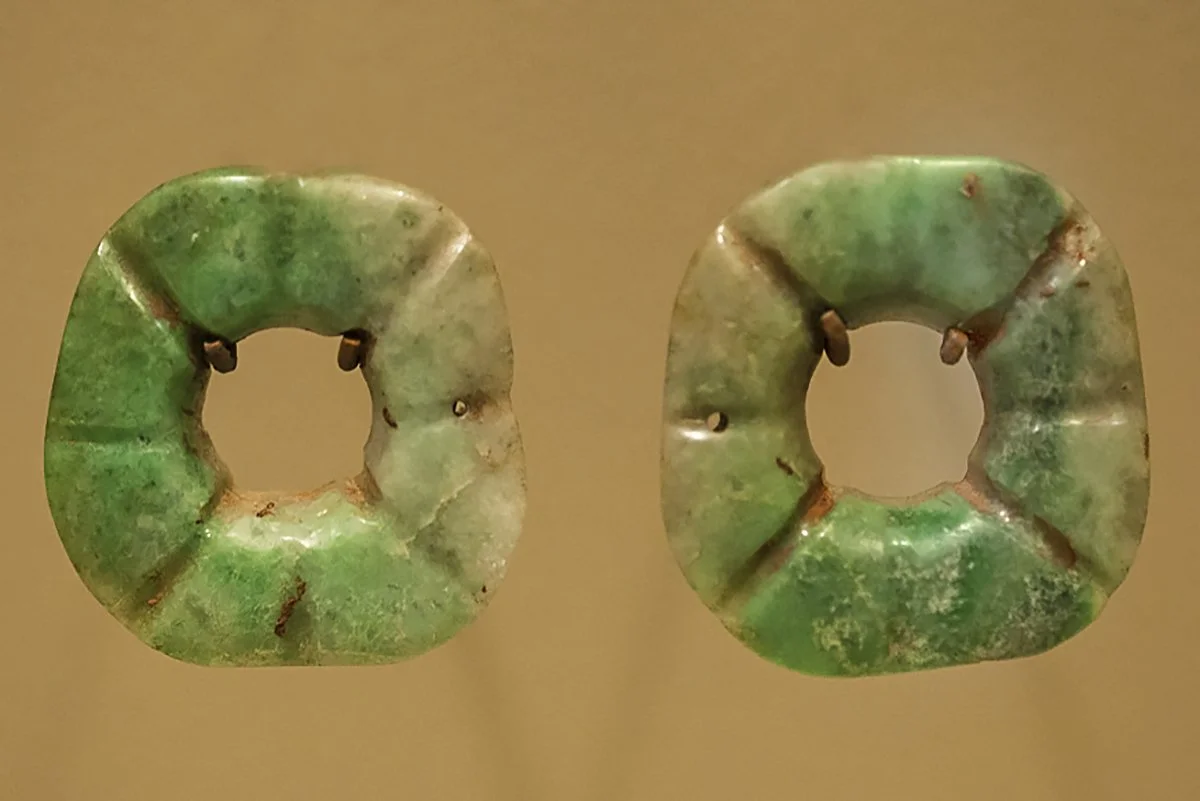
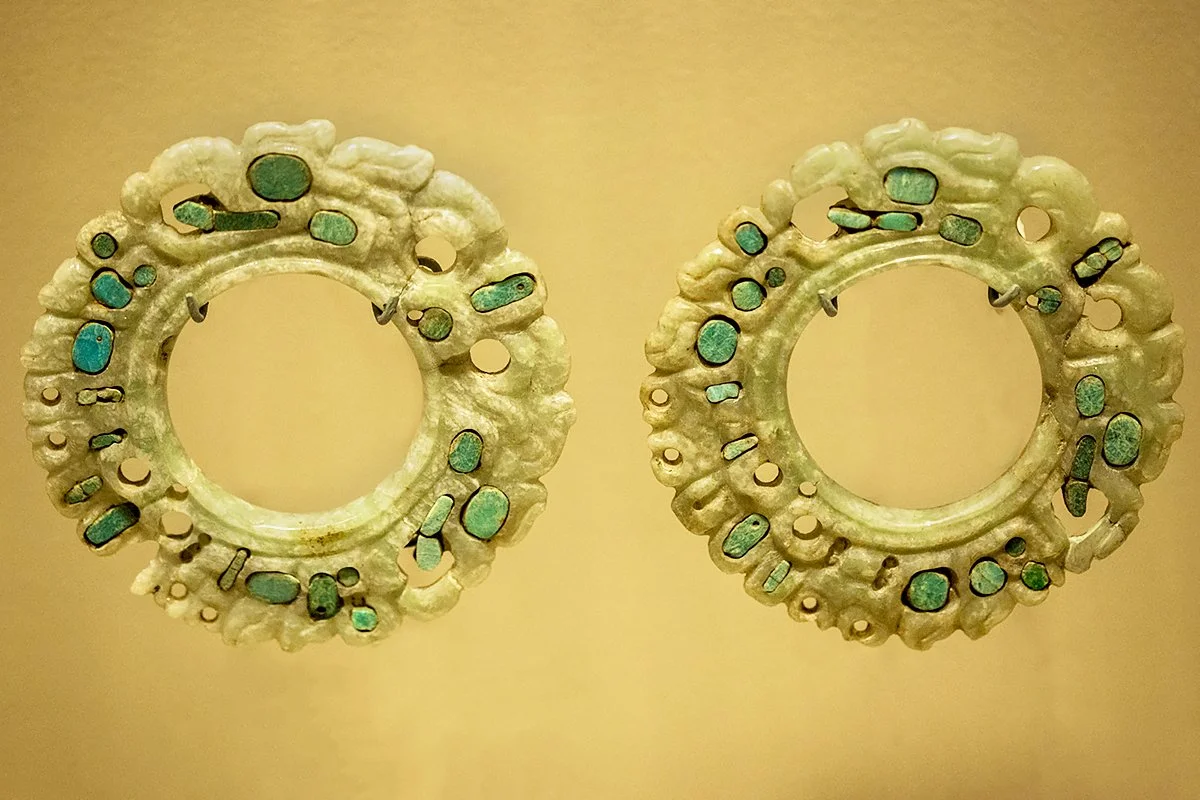
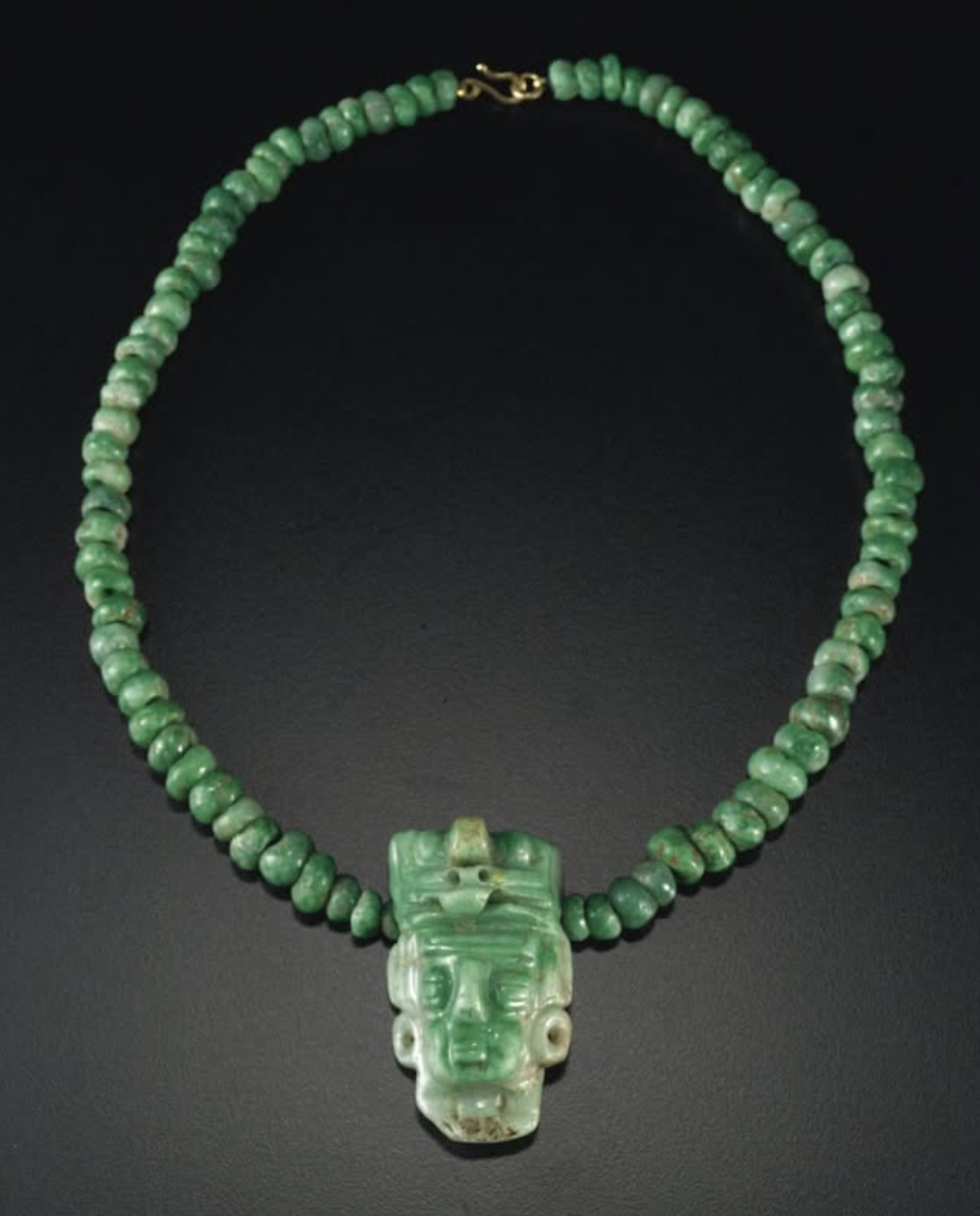
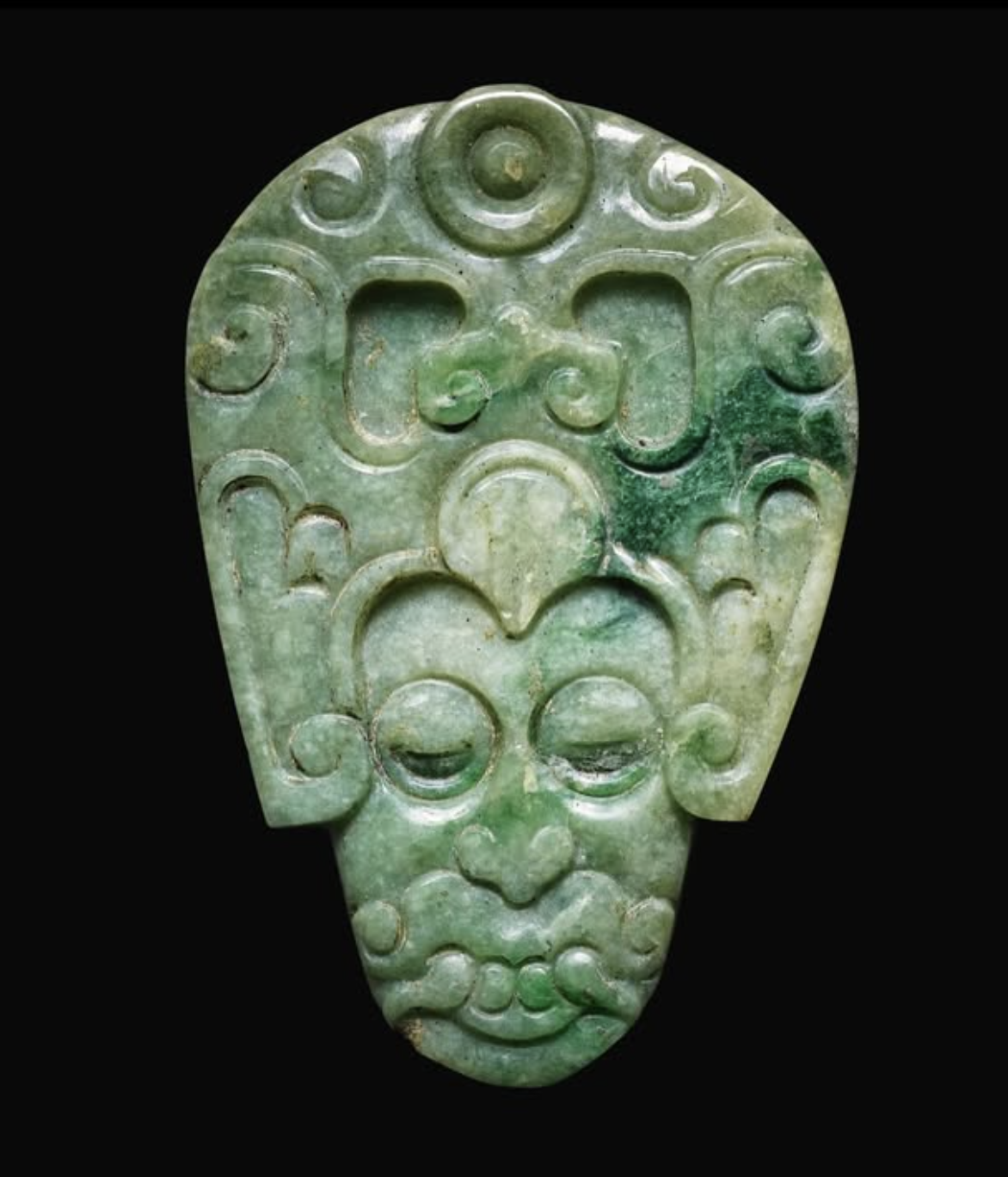
During the Maya Classic Period (AD 300-900), the highest quality translucent blue-green jade symbolized royal power. Artisans meticulously polished jade in palace workshops, creating breathtaking works of art. The sun god head from Altun Ha, now housed in Belize, weighs 4.4 kilograms and is the largest single Maya jade artifact ever discovered. The carved plaque found at Nim li Punit mirrors the pectoral ornaments worn by kings depicted on stelae, confirming jade's central role in royal ceremonies.
These jade treasures served as diplomatic gifts to establish political alliances between Maya city-states and as burial offerings to accompany rulers into eternity. Above King Pacal's tomb at Palenque, archaeologists discovered abundant debris from sawing jade, indicating that royal workshops were located within the palace itself.
A Gemstone Accessible to Commoners
Yet jade was not entirely beyond reach. In the marketplaces of lowland cities like Tikal and Cancuen, jade beads and celts of varying quality were readily available for purchase by common people. In small agricultural communities like Ceren, nearly every household owned a greenstone celt. Archaeological evidence suggests that jade beads may even have been used as currency in daily transactions.
This pattern of "stratified use" reveals the complexity of Maya society: the same material carried different social meanings depending on its quality.
A Discovery That Challenges Conventional Wisdom
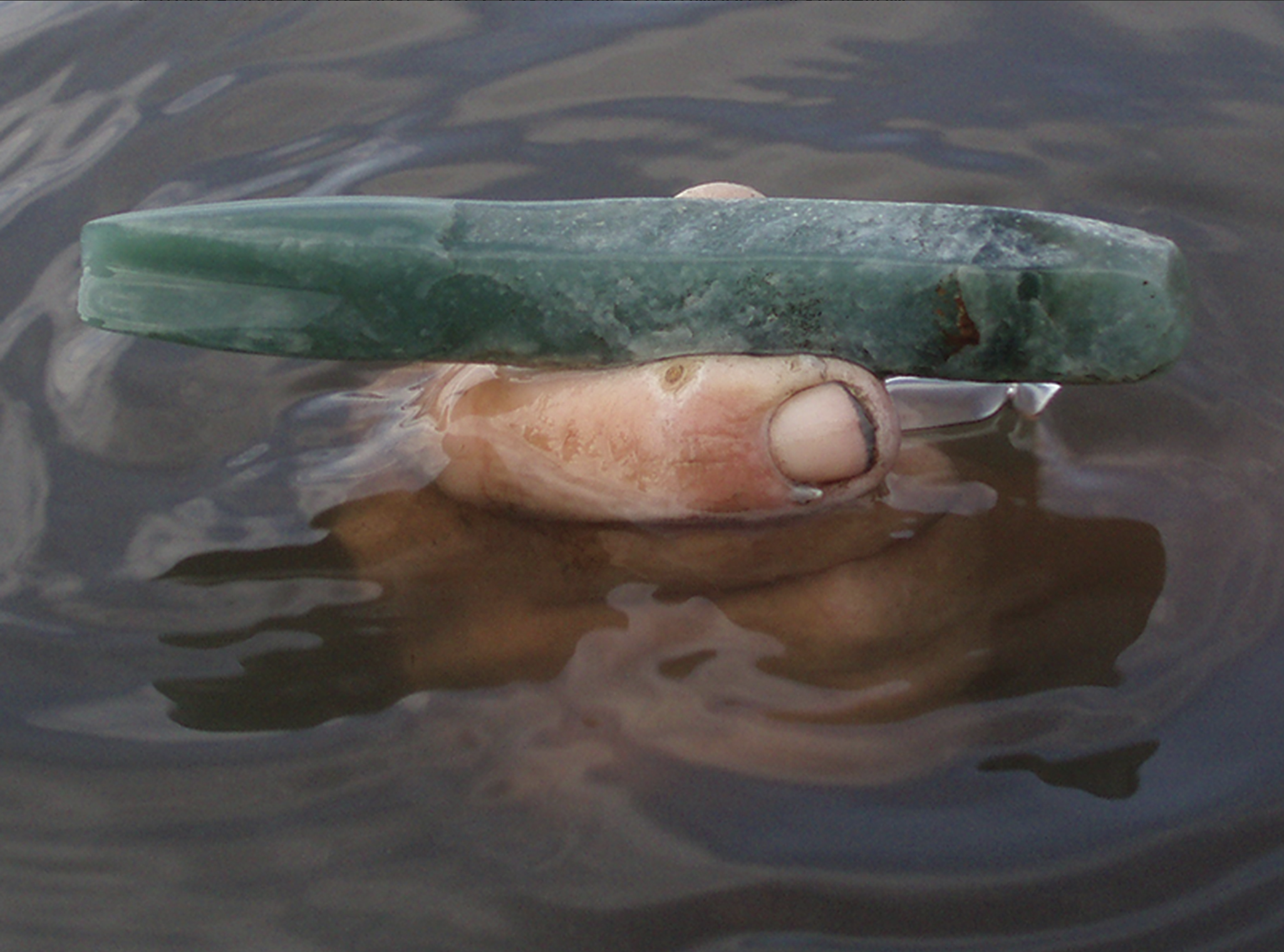
The jadeite gouge after discovery (photograph by Heather McKillop).
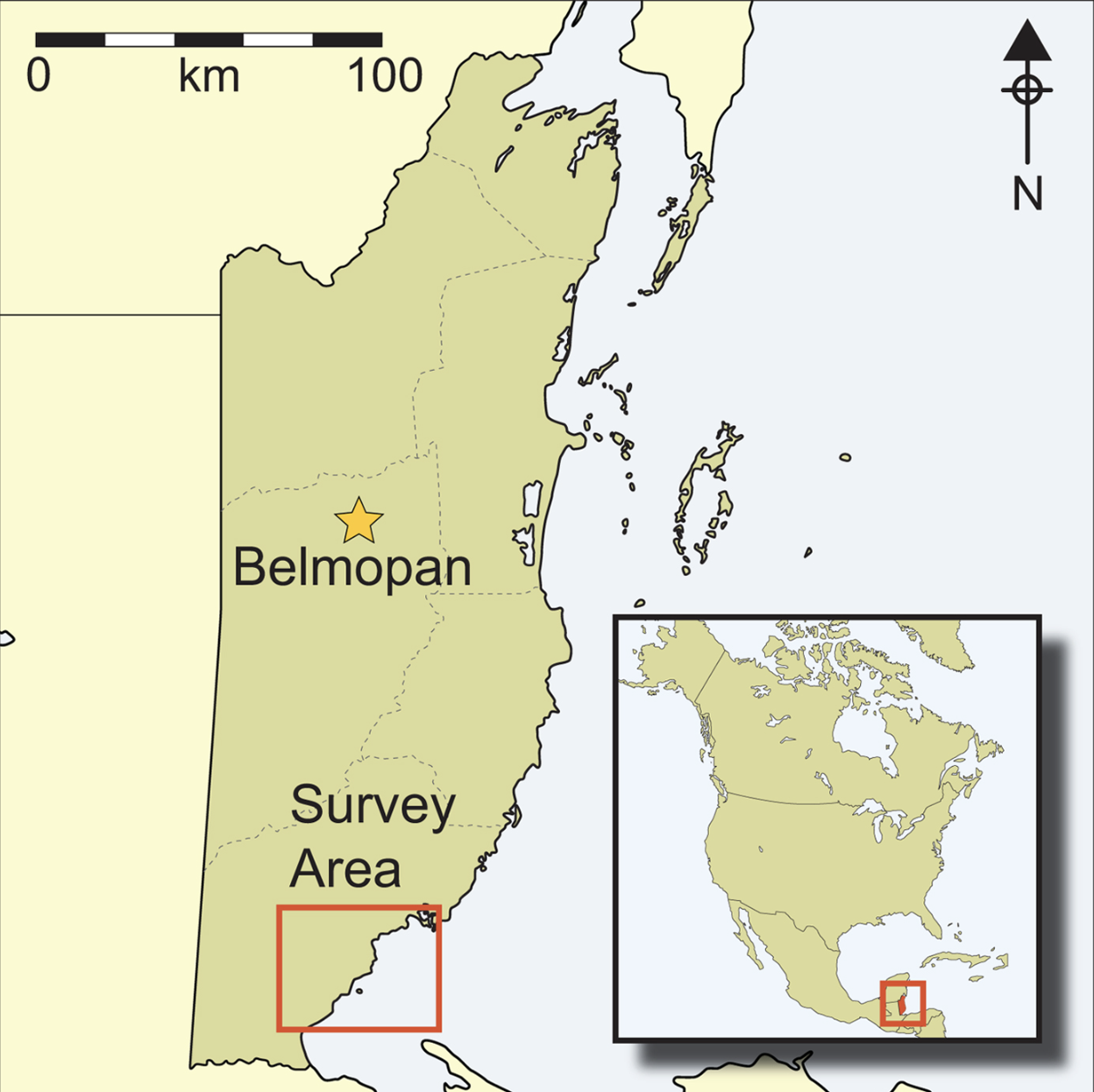
In 2019, archaeologists made a remarkable discovery at the underwater salt works site of Ek Way Nal in Belize: a jade gouge with a wooden handle, resting quietly against a wooden post. This tool was made of nearly 98% pure jadeite of exceptional quality, with crystal structure so tight it appeared translucent blue-green—material that should have been reserved for royalty.
Yet it was found in a salt-making workshop. Microscopic wear analysis revealed that the gouge had indeed been used, with wear on the working edge and friction marks on the wooden handle. This finding shattered the traditional notion that "high-quality jade was used only for ritual purposes," demonstrating that Maya salt workers had accumulated sufficient wealth through producing and selling salt to purchase premium tools to improve production efficiency.
III. The Spiritual World of Jade: Color and Meaning
The Maya believed that jade was not merely beautiful stone, but a bridge connecting the material and spiritual worlds. Pure jadeite is white, but trace metal elements in nature give it rich colors, each carrying different meanings:
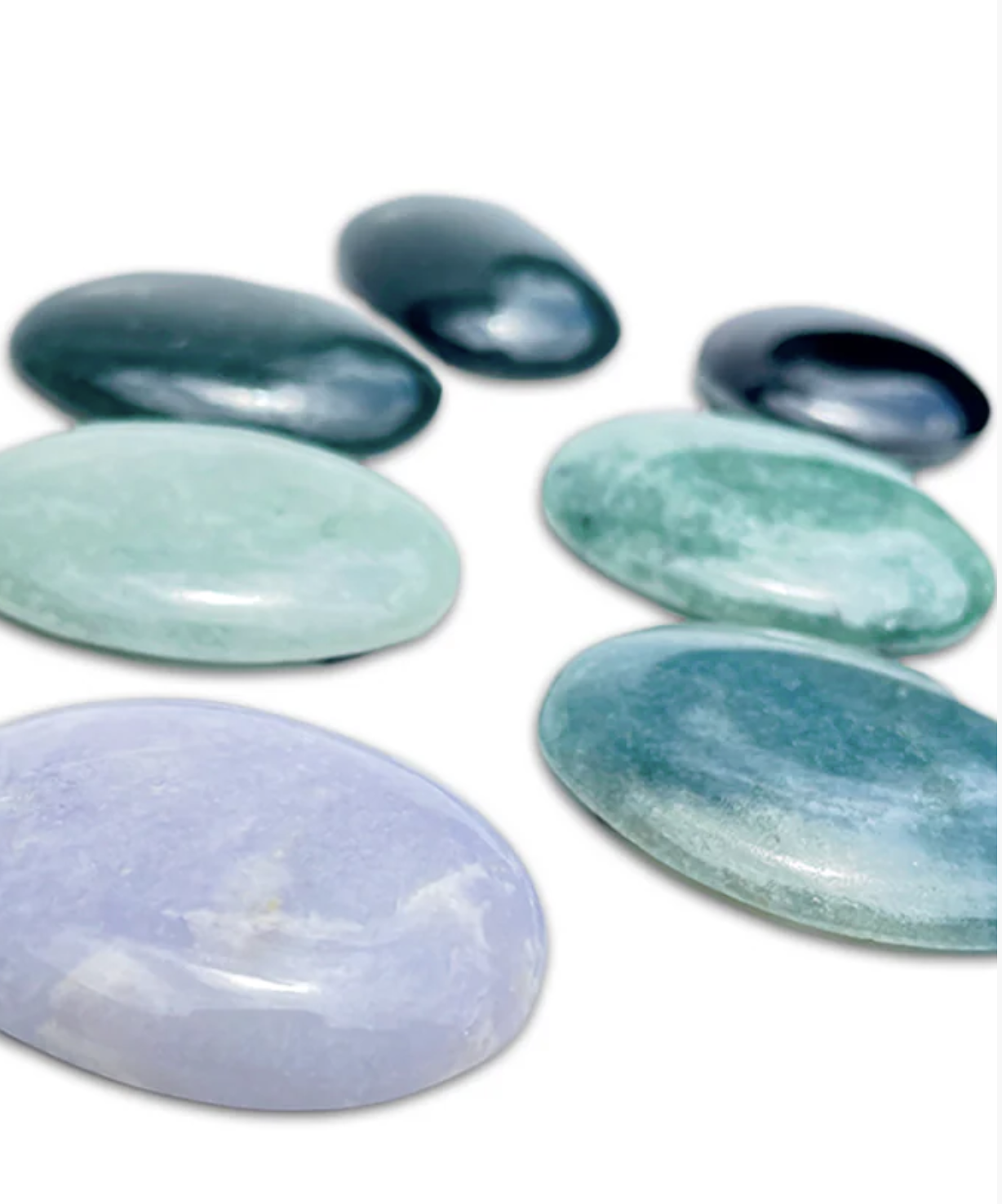
Different colors of jadeite.
Imperial Jade (translucent blue-green) symbolizes status and immortality, the supreme gift for rulers. Green jade represents life, breath, and eternity, a blessing for weddings and new births. Black jade embodies power; according to ancient legend, rulers used black jade tablets to control floodwaters and command the world. Purple jade carries hopes of love and dreams, a token of affection between lovers. White jade symbolizes purity, suitable for daughters or newborns. Blue jade represents truth and wisdom, a testament to the bond between teacher and student.
The Maya also attributed miraculous healing powers to jade. They believed that wearing jade could cure heart and lung diseases, purify the blood, and prolong life. Placing jade under one's pillow could induce lucid dreams and facilitate communication with ancestors. These beliefs reflect the Maya's profound understanding of nature and their worldview that integrated material and spiritual realms.
IV. From Mining to Carving: A Complete Industry Chain
The Maya jade industry formed a complete production system. At mines in the Motagua River valley, workers extracted raw stone and performed preliminary processing. Archaeologists have discovered numerous grinding stones at mine sites, indicating that preforming and shaping operations took place locally.
Roughly shaped jade preforms were transported by canoe to processing centers in river port cities like Cancuen. There, craftsmen mastered advanced techniques: using sawing methods to divide materials, drilling tools to create beads, abrasives to repeatedly grind and polish, and finally carving exquisite patterns and hieroglyphs on surfaces. The entire process was time-consuming and labor-intensive; a fine jade ornament might require months or even years to complete.
Finished products then entered distribution networks: high-quality jade flowed to royal workshops for secondary processing; medium-quality pieces were sold in city markets; and ordinary-quality items reached remote communities through coastal trade networks. Even at coastal salt works like Ek Way Nal, workers could exchange salt for jade.
V. Eternity in Museums: What We See Today
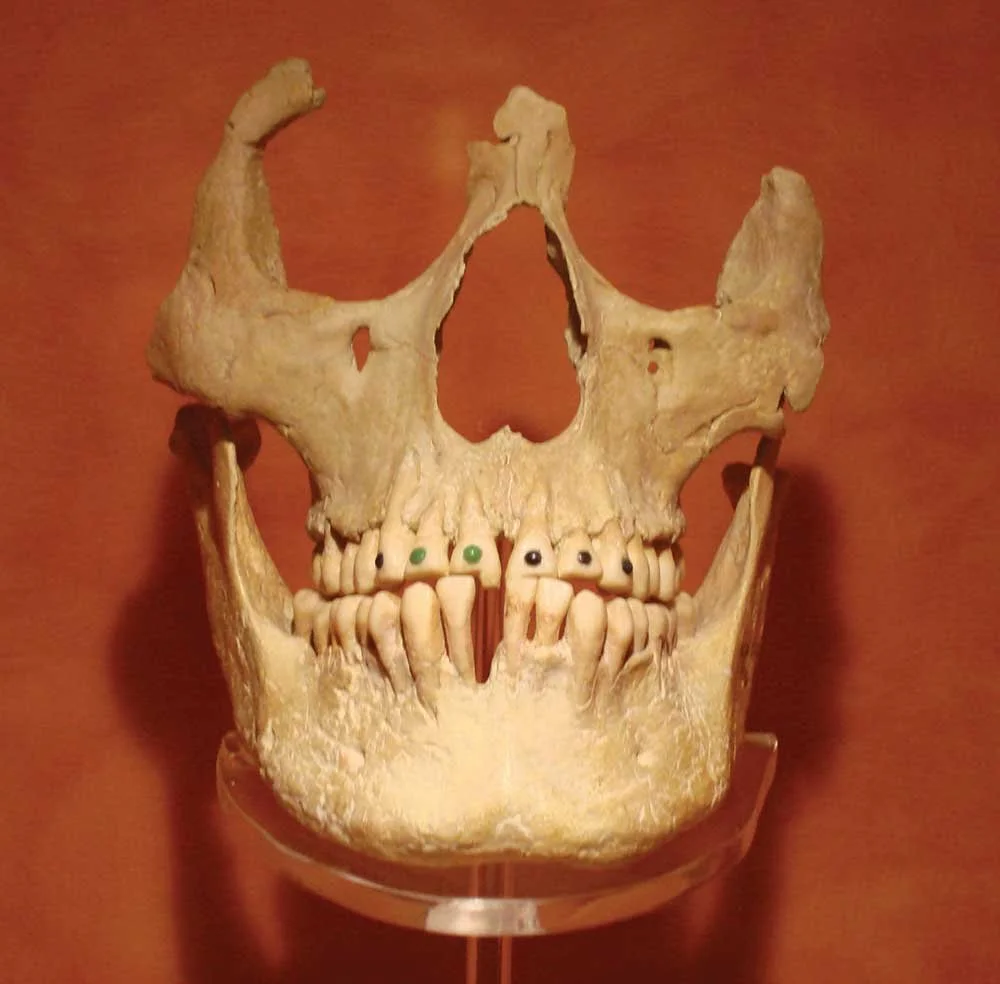
A skull inlaid with jade teeth, exhibited at the National Museum of Anthropology in Mexico City.
Over a thousand years have passed, and Maya civilization has long been buried in the river of history, yet jade still retains its former brilliance. Due to its chemical stability, Maya jade in museums mostly maintains vivid colors and intact texture. The highest quality royal collections display translucent blue-green hues with tightly packed crystal structures; jade beads and tools used by commoners range from translucent to opaque, with surfaces perhaps bearing traces of wear—but these are precisely the testament to their authentic history.
These jade artifacts are not merely works of art, but keys to decoding Maya social structure, economic systems, and spiritual beliefs. From multi-kilogram sun god sculptures to household celts; from royal burial offerings to salt workers' labor tools—jade existed in all aspects of Maya life in various forms, transcending the boundary between sacred and secular.
Conclusion
The story of jade in Maya civilization is a story about value and meaning. The same stone, in the hands of a king, symbolizes power; in the hands of a salt worker, it is a tool of production. It can be a medium to the divine realm or a commodity in the marketplace. This multiplicity precisely reflects the complexity and maturity of Maya society.
Today, when we pause before museum display cases to gaze at these green gemstones that remain radiant after a thousand years, we see not only the material remains of a vanished civilization, but humanity's eternal attempt to imbue natural objects with meaning. Jade, "the mineral of the earth gods," in its unique way, allows us to touch the soul of the Maya people.
